Lefkada Olive Oil — The Island's Finest & Where to Buy It
Lefkada has been producing olive oil for centuries. Here is what makes it special, the varieties behind it, and where to find the best bottle on the island to take home.
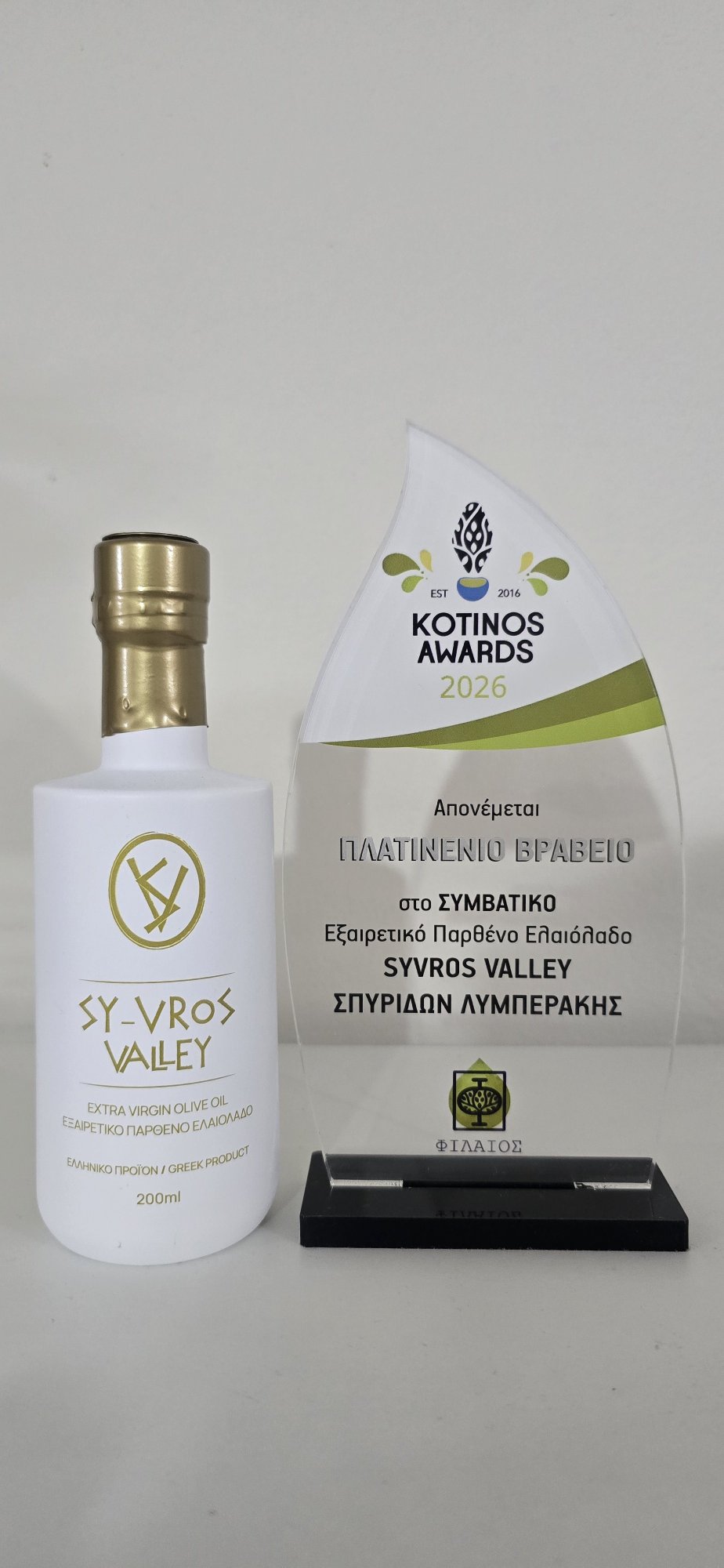
Syvros Valley Extra Virgin Olive Oil — Platinum, Kotinos Awards 2026.
If you spend any time on Lefkada away from the coast, you'll notice the olive trees almost immediately. They cover the hillsides, line the winding mountain roads, and fill the valleys inland with their characteristic silver-grey shimmer. The island has been cultivating olives for centuries, and the locals will tell you — with complete conviction — that their olive oil is among the finest in Greece. After tasting it, that claim is difficult to dispute.
For visitors, Lefkada olive oil is one of the island's most rewarding discoveries: genuinely exceptional quality, produced by families who have been doing this for generations, and available to take home at a fraction of what a comparable bottle would cost in a specialty food shop elsewhere in Europe.
The Olives Behind the Oil
What distinguishes Lefkada's olive oil starts with the variety. The island has its own traditional olive — the Ασπρολιά (Asprolia), whose name translates literally as "white olive" — found almost exclusively on Lefkada. It produces oil with a notably smooth, delicate character: mild fruitiness, a gentle aromatic finish, and an approachability that makes it ideal both for cooking and for eating raw on bread or salad. It is the variety that has defined Lefkadian olive oil culture for generations.
Many producers also cultivate Koroneiki — Greece's most widely grown olive variety, and one of the highest in polyphenol content of any olive in the world. Polyphenols are natural antioxidants associated with a range of health benefits, and Koroneiki is particularly rich in oleocanthal and hydroxytyrosol — compounds that give the oil its characteristic peppery finish and robust aromatic complexity. The result is an oil with real depth of flavour and notably good shelf stability.
Both varieties, grown in Lefkada's terrain and climate, produce oil of a quality that reflects the care with which the island takes its olive heritage.
Syvros — The Heart of Lefkada's Olive Country
Just 3.5km from Vasiliki, the village of Syvros sits quietly in the olive-covered hills of the island's interior. Vasiliki itself has its own beaches and a lively harbour, making a visit to the Liberakis mill a natural pairing for a half-day in the south of the island. The short drive from Vasiliki towards Syvros takes you through terraced olive groves dropping down the hillside — characteristic Lefkadian countryside that feels a world away from the coastal resorts.
Syvros is the kind of village where olive oil production is not a lifestyle business or a tourist attraction — it is simply what the families here have always done.
The Liberakis Organic Olive Mill
🏆 Platinum — Kotinos 2026🏆 Berlin Global Olive Oil Awards 2026Certified OrganicGenerational Family BusinessOpen 9am – 9pm
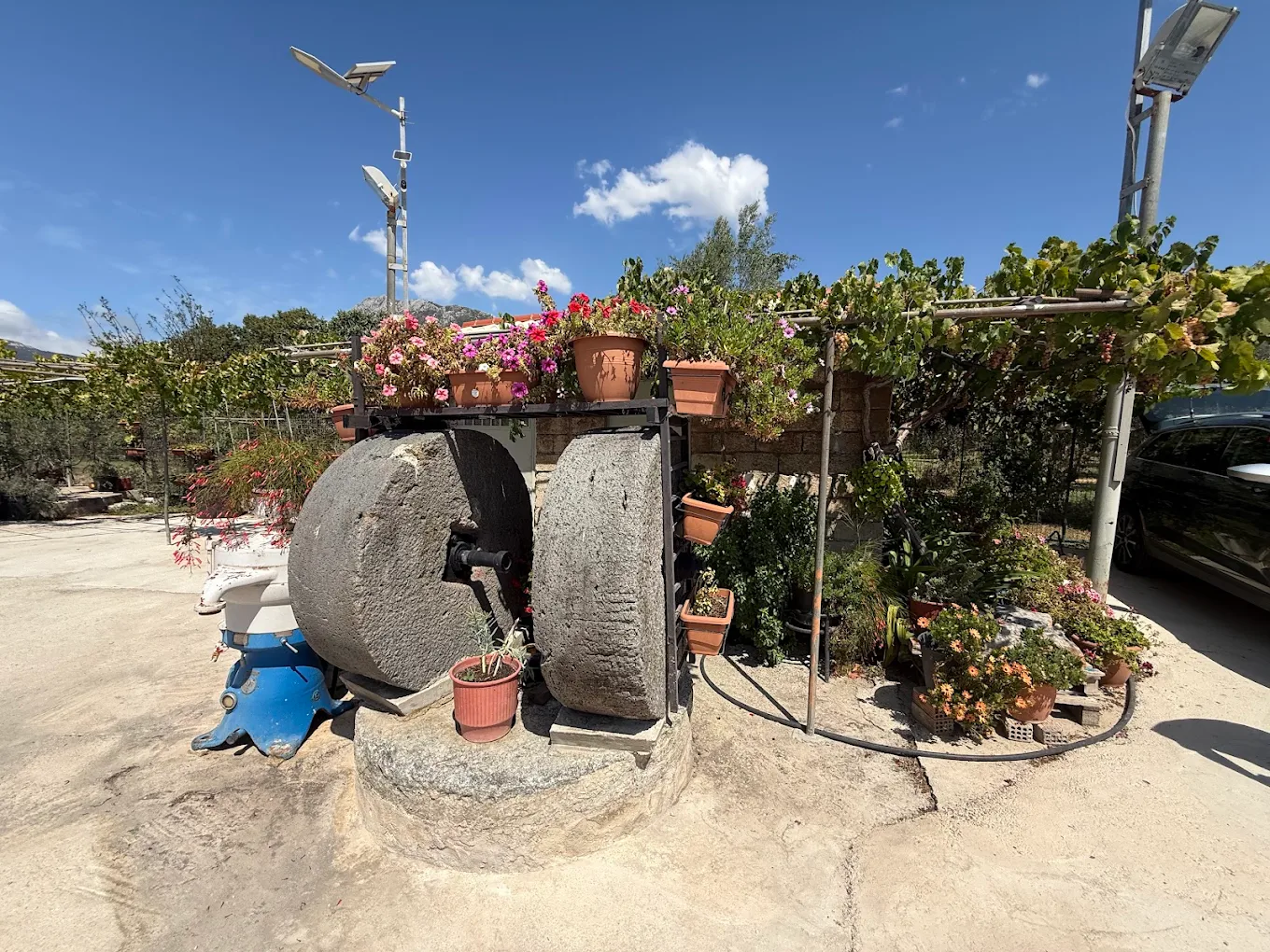
Liberakis Biological Olive Oil Factory, Syvros
The Liberakis family have been producing olive oil in Syvros for generations. Their mill holds EU organic certification — meaning it operates under regularly inspected, regulated standards that verify responsible farming and processing practices at every stage of production. Cold pressing is carried out on the day of harvest, which preserves both flavour and nutritional quality far better than oils processed days or weeks later.
Their bottled label, Syvros Valley, was awarded Platinum at the Kotinos 2026 competition — the highest honour at Greece's most prestigious olive oil event. For context, the Kotinos competition draws entries from across Greece and is judged to international standards. A platinum award is a genuine mark of exceptional quality, not a participation trophy.
The mill is open throughout the summer season from 9am to 9pm. Tastings, local honey, olives and other produce are available alongside the oil itself. This is not a touristy experience — it is a piece of authentic Lefkadian life, the kind that most visitors never find. A bottle of Syvros Valley makes one of the most meaningful things you can bring home from a Lefkada holiday.
Lefkada's main olive harvest runs from November through December — the moment when the island's rhythm shifts entirely, families take to the hillsides, nets are spread beneath the trees, and the pressing begins. The oil produced at this point, from green and early-ripening olives, tends to be intensely flavoured with high polyphenol content and a pronounced peppery finish.
February brings a second pressing from fully ripe, late-season olives, producing oil that is rounder, milder and with a deeper golden colour — a different character rather than a lesser one, and one that many local connoisseurs particularly enjoy for table use.
If your trip falls during either October or February, you are visiting at the most interesting time of year from a food and culture perspective. Outside these windows, the Liberakis mill is open throughout the summer and bottles of Syvros Valley are available year-round.
Getting there: From Vasiliki, Syvros village is just 3.5km away — approximately a 5-minute drive through the olive groves and hills of the island's interior. Use the Google Maps pin for precise directions.
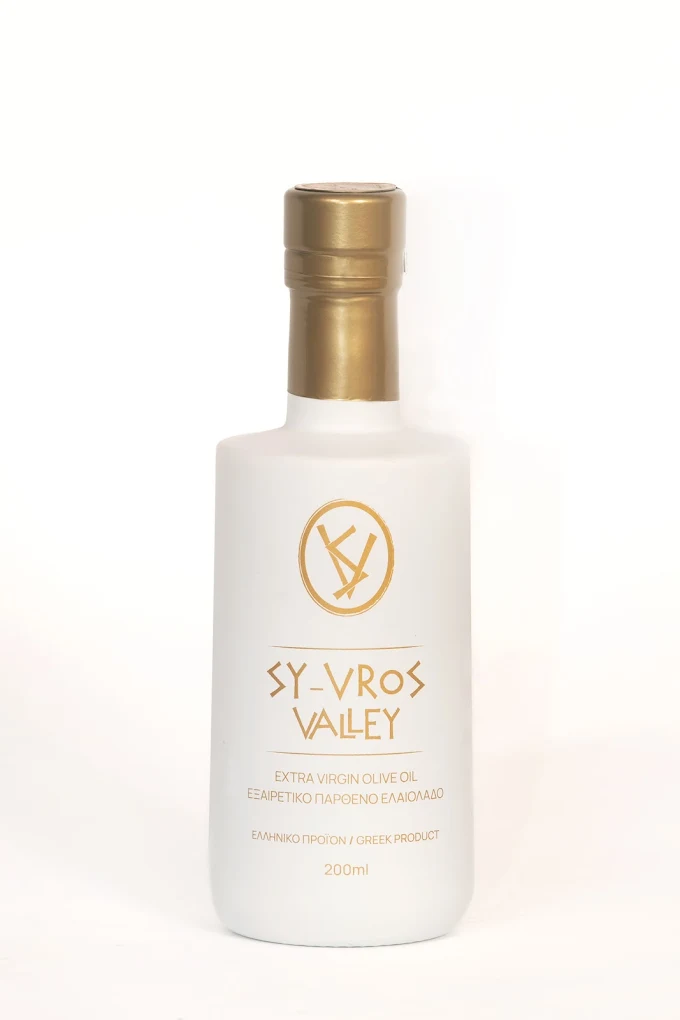
Syvros Valley Extra Virgin Olive Oil is bottled in a frosted white glass bottle — the matte finish is not just aesthetic. Frosted and dark glass blocks sunlight from reaching the oil, protecting it from the oxidation that degrades both flavour and nutritional quality. It is exactly what you should look for when buying any quality olive oil.
What to Look For When Buying
Whether you're buying from the Liberakis mill or elsewhere on the island, a few things are worth knowing before you buy:
Cold pressed — the oil has been extracted without heat, which preserves the flavour compounds and nutritional content that heat destroys. Look for "cold pressed" or "first cold press" on the label.
Organic certification — a sign that the producer operates under controlled, traceable practices with no synthetic inputs. The Liberakis mill itself holds full organic certification, meaning the commitment to quality starts in the grove, not just at the press.
Harvest date, not just expiry date — fresher olive oil is better olive oil. A bottle showing a recent harvest year will be noticeably superior to one sitting on a shelf for two or three years.
Dark or frosted glass bottles — light degrades olive oil faster than almost anything else. A quality producer will always bottle in dark or frosted glass so sunlight cannot penetrate. Avoid oils sold in clear glass or plastic for any significant quantity.
Staying on Lefkada? We'll Point You in the Right Direction
Guests at Infinity Lefkas Villas are welcome to ask us about visiting the Liberakis mill and other local producers. We know the island well — we're happy to share what we know.